


Meet New People Worldwide with Random Video Call Stranger Chat
Have you ever felt a quiet longing to connect with someone entirely new, without the weight of your everyday life? Video call strangers is a direct, live face-to-face conversation with a person you have never met, accessed instantly through a dedicated platform. It works by matching you for a real-time chat, offering a private space to share a laugh, exchange perspectives, or simply feel heard by another human. The benefit is the opportunity for genuine human connection in its simplest, most spontaneous form.
Why Chatting with Unknown Faces Boosts Language Fluency
Conversing with video call strangers directly accelerates language fluency because it forces real-time processing without a script. Unlike text chats, you must instantly decode facial expressions and tone, which deepens comprehension. The unpredictable nature of a stranger’s responses eliminates rehearsal, pushing you to think on your feet and expand active vocabulary. This exposure to diverse accents and speaking speeds trains your ear to parse natural speech, not textbook dialogues. The pressure to maintain a coherent conversation under a stranger’s gaze also builds confidence, turning hesitation into automatic recall. Every call becomes an unscripted, high-frequency immersion session that no classroom can replicate.
Breaking Down Conversation Anxiety Through Anonymous Dialogues
Anonymous dialogues on video call platforms methodically dismantle conversation anxiety by removing identity-based judgment. Real-time anonymous interaction forces the brain to focus purely on verbal exchange, bypassing social self-consciousness. Each session lowers the emotional stakes, allowing incremental exposure to spontaneous speech. This repeated, low-risk engagement reprograms the amygdala’s fear response to unfamiliar interlocutors. Over time, learners shift from hyper-vigilance to fluid improvisation, treating each anonymous stranger as a non-threatening practice partner for authentic language use.
Real-Time Pronunciation and Listening Practice with Native Speakers
Real-time pronunciation and listening practice with native speakers on stranger video calls forces your brain to process authentic, unfiltered speech at natural speed. You receive immediate feedback when struggling with a word, allowing you to adjust your articulation on the spot. This environment eliminates the safety net of pre-recorded audio, training your ear to catch regional accents, elision, and colloquial rhythms that textbooks miss. Audio-lingual immersion via live calls directly improves your phonetic accuracy and comprehension stamina through real-world conversational pressure.
- You instantly hear the correct stress and intonation patterns when a native speaker repeats a mispronounced phrase back to you.
- Listening to varied accents in live context sharpens your ability to distinguish subtle vowel and consonant differences without caption support.
- Repeating words aloud after native correction builds muscle memory for difficult sounds like the “th” or rolled “r.”
- Background noise and overlapping speech during calls train your brain to filter relevant phonetic data from distractions.
How Spontaneous Talks Improve Vocabulary Retention
Spontaneous talks with strangers on video calls improve vocabulary retention by forcing the brain to retrieve words under real-time pressure, a process known as the testing effect for active recall. Unlike rehearsed study, unpredictable conversation requires immediate lexical selection, which strengthens neural pathways each time a word is successfully used. When a speaker falters and self-corrects mid-sentence, the error and subsequent retrieval create a lasting memory trace, as the brain prioritizes information accessed under cognitive demand. This unpredictable context ensures words are not passively recognized but actively wielded, cementing them through repeated, context-rich application in live dialogue.
Q: Why does a spontaneous misstep in vocabulary during a video call lead to better retention? A: The brain encodes the moment of struggle and successful recovery as a high-salience event, making the word more retrievable in future conversations.
Safety First: Navigating Random Online Conversations
Safety First: Navigating Random Online Conversations when video chatting with strangers requires immediate boundary enforcement. Before connecting, disable location services and blur your physical background to prevent doxxing. During the call, never show your face alongside identifying items like mail or work badges.
Treat every stranger as a potential recorder; assume anything you say or show can be captured and shared.
If the conversation veers toward personal data or explicit requests—even as a joke—end the call instantly. Use the platform’s report and block functions without hesitation. Keep a pre-prepared neutral story ready to exit politely if you feel pressured. Your primary tool is your exit button; a safe caller learns to use it early rather than later.
Choosing Platforms with Moderation and Reporting Tools
When diving into video chat with strangers, picking a platform random video chat that actually lets you curb bad vibes makes all the difference. Look for sites with a clear, one-tap report button and robust moderation—these features aren’t just fluff; they’re your safety net. Before pressing “next,” check if the platform actively bans users who ignore community rules. Active moderation systems aren’t always flashy, but they keep conversations from souring fast. Q: How do I tell if a platform takes reporting seriously? A: Peek at their trust page or user reviews—if they boast about swift bans for creepy behavior, you’re in a solid spot.
Setting Personal Boundaries Before Starting a Call
Before you initiate a video chat with a stranger, you must decide your absolute limits. Determine topics you will not discuss, such as your home address or workplace, and prepare a polite but firm exit line. Your comfort is non-negotiable; you can end any conversation instantly without justification. Keep your background neutral and free of personal items. This advance planning ensures you control the interaction, not the other person. Establishing these pre-call conversation limits is your primary safety tool, transforming a potentially risky encounter into a managed experience where you retain full authority.
Protecting Your Identity While Staying Open to New Friends
When meeting new people on video call strangers platforms, protect your identity by using a nickname rather than your full name. Avoid revealing your home address, workplace, or financial details in early conversations. To stay open, share interests like hobbies or music without specifying your exact location or daily routine. Use a neutral background or virtual backdrop to conceal personal surroundings. If asked for private information, politely deflect the question.
- Start conversations with a generic avatar or first name only.
- Gradually share surface-level interests before any personal data.
- Immediately end any call that pressures you for identifiable details.
This approach maintains open yet secure social boundaries, allowing genuine connection without compromising privacy.
Cultural Exchange Beyond Textbooks
Cultural Exchange Beyond Textbooks happens when you use video calls with strangers as living classrooms. Instead of memorizing facts, you observe real-time gestures, meal etiquette, and unfiltered slang. Avoid rehearsing topics; instead, ask them to narrate their morning routine or teach you a local handshake. One powerful technique is to have them
show you a random object from their room and explain its history or cultural significance
—this yields context no textbook can provide. Record your own list of unfamiliar sounds or expressions during the call, then discuss their meaning together. This turns passive watching into active, reciprocal discovery.
Discovering Slang, Idioms, and Regional Expressions
Video calls with strangers become a live classroom for authentic language immersion, where you catch slang like “chuffed” from a Brit or “hella” from a Californian in real time. You learn regional idioms—like “pop by” versus “swing by”—through natural banter, not grammar drills. Hearing a phrase in context, with tone and gesture, cements its meaning far better than a textbook definition. It turns passive vocabulary into active, conversational use.
- Ask partners to explain their local slang phrases when they first appear.
- Keep a running list of idioms you hear, noting the region and scenario.
- Mimic the expression back immediately to practice pronunciation and nuance.
Understanding Non-Verbal Cues from Different Cultures
When you video call strangers from different cultures, mastering understanding non-verbal cues transforms raw connection into genuine exchange. A thumbs-up might signal approval in one region but offense in another, while direct eye contact can be respectful in Western contexts but confrontational in parts of Asia. You learn to read pauses not as awkward silences but as thoughtful listening in Japan, or interpret expressive hand gestures as passion in Italy. Each nod, smile, or personal space shift becomes a silent language. This fluency lets you adapt your own body language in real-time, avoiding misunderstandings and building trust across borders without a single spoken word.

Learning Etiquette Through Direct Interaction with Locals
When you video call strangers who are locals, you absorb etiquette that no phrasebook teaches. You learn when to bow deeply versus just nodding, or the precise second to close a cultural etiquette gap with a simple smile. They’ll forgive a fumbled greeting but will remember you didn’t remove your shoes at their virtual front door. Watching their real-time reactions—a slight wince, a tiny hand gesture—teaches you exactly how loud your voice should be or whether to gesture while talking. You stop guessing and start mirroring their rhythm, making every future interaction smoother.
Technical Tips for Seamless International Chats
For stable video calls with strangers abroad, always connect via a 5 GHz Wi-Fi band to minimize interference from neighboring networks. Use a VPN optimized for low latency, not one that bounces traffic across continents. In your device audio settings, disable “noise suppression” if your international contact’s voice cuts out, as these filters often misidentify low-toned foreign speech as background noise. Q: My connection drops when a stranger speaks; why? A: It likely triggers faulty echo cancellation; switch to wired headphones with a dedicated microphone to bypass software conflicts.
Optimizing Internet Speed and Audio Clarity
For seamless chats with strangers, prioritize a wired Ethernet connection over Wi-Fi to eliminate latency spikes. Close bandwidth-heavy background apps and lower your video resolution to 720p, preserving throughput for stable audio. Use a dedicated USB microphone with noise suppression, and enable “echo cancellation” in your OS settings. Prioritizing low-latency audio codecs reduces garbled speech. Q: How can I test if my audio is lagging? A: Speak a short phrase, then listen for a one-second delayed echo of your own voice in your headset—if present, reduce your audio buffer size in your chat app’s advanced settings.
Using Built-In Translation Features Without Disrupting Flow
When connecting with strangers globally, real-time translation overlays prevent conversation halts by displaying subtitles directly on the video feed. To avoid lag, pre-select source and target languages before the call begins. Enable push-to-translate hotkeys so your mic remains active during interpretation, preventing awkward silence. Keep camera focus steady; sudden movements can confuse the translation algorithm. Test audio clarity beforehand—background noise often disrupts automatic speech recognition more than the translation itself.
Built-in translation works best when treated as a transparent layer rather than a separate tool, requiring pre-set languages, stable audio, and minimal manual toggling to preserve conversational rhythm.
Managing Time Zones to Connect with Users Worldwide
When video chatting with strangers worldwide, managing time zones keeps your connections alive. Start by using a world clock app to see where it’s daytime. Mornings in your time often match evenings on the other side, making spontaneous calls smoother. For consistency, follow this sequence:
- Pick a time block that overlaps with your target region’s peak hours—like late afternoon for you, early evening for them.
- Note the zone difference in your chat bio to set expectations.
- Nudge a friendlier vibe by scheduling a “coffee chat” slot weekly, converting it to their local time.
This way, you’re never waking someone up or missing a fun talk.

Overcoming Common Challenges in Live Encounters
Navigating video calls with strangers requires managing technical glitches, awkward silences, and mismatched expectations. To overcome these, start by testing your camera, microphone, and lighting before the call to avoid mid-conversation disruptions. When a silence hits, pivot to a simple, open-ended question like “What’s the most interesting place you’ve visited recently?” to naturally restart dialogue. If the other person’s energy differs from yours, match their pace—mirror their enthusiasm or calmness to build rapport. During freezes or lag, don’t repeat yourself; instead, say “You cut out for a moment—could you repeat that?” to stay smooth. Q: What if they keep interrupting? A: Assertively say “Let me finish this point, then I’d love your take,” using a calm but firm tone to reset the flow.
Dealing with Awkward Silences and Keeping Conversations Alive
When a lull hits, treat it as a natural breath, not a failure. Quickly pivot with an open-ended question about their immediate environment or a playful “this or that” choice. Mastering recovery tactics is essential; have a few go-to anecdotes or “would you rather” scenarios pre-loaded. If silence stretches, acknowledge it with humor—“I think we just synchronized our thinking”—to reset the energy. Keep a mental shortlist of visually shareable props near your desk; a weird object or a pet’s sudden appearance can instantly reignite the flow without forcing scripted dialogue.
Handling Language Barriers with Simple Phrases and Gestures
When language barriers arise on video calls with strangers, simple phrases and gestures become essential communication tools. Use basic greetings like “Hello” and “Thank you” in the other person’s language, even if imperfectly pronounced. Pair these with clear gestures—pointing at your screen, nodding, or miming actions like drinking or waving. Avoid complex sentences; instead, type single keywords in the chat box. This approach maintains flow and reduces miscommunication. A thumbs-up or head shake can confirm understanding without words, keeping the conversation moving.
Use common greetings, single keywords, and clear gestures like pointing or nodding to bridge language gaps during live video chats.
Turning Repetitive Small Talk into Deep, Meaningful Discussions
To escape the “How’s your day” loop, ask curiosity-driven questions that invite stories, not facts. Instead of “What do you do?”, try “What part of your work makes you lose track of time?” When they answer, share a personal, slightly vulnerable reaction—this signals it’s safe to go deeper. If the chat stalls, reference something in their background or a previous comment to pivot naturally.
- Swap generic “what” questions for “why” or “how” ones that reveal feelings.
- Mirror their energy—if they get excited, lean in and ask for details.
- Use awkward silences as openings to say “Honestly, I’m not sure what to say next—what’s something you’ve been obsessed with lately?”
Building Confidence Through Regular Digital Interactions
Building confidence through regular video call strangers hinges on structured, low-stakes repetition. Initially, short calls with a clear time limit reduce anxiety, allowing you to focus on active listening rather than perfecting your own dialogue. Over sessions, you learn to read unfamiliar facial cues and adjust conversational pacing, which directly strengthens your social adaptability. Each successful interaction, no matter how brief, reinforces that you can navigate unpredictable topics without catastrophic outcomes. This gradual exposure transforms the initial awkwardness into a reliable skill, where the volume and variety of digital interactions naturally erode self-doubt and build a grounded sense of communicative competence.
Tracking Progress in Comprehension and Speaking Speed
For video call strangers, systematically tracking your comprehension gains and speaking speed is essential. Start by recording brief, post-call summaries of how many words you understood and noting any moments you stumbled. Using a stopwatch during short monologues provides a precise metric for your articulation rate. Over time, compare your speech clarity and recall accuracy to baseline logs. Measuring real-time fluency gains turns abstract confidence into tangible data. To refine this, Q: How often should I log my progress to see reliable trends? A: Log after every three calls to ensure enough data, but avoid daily recording to prevent anxiety from skewing your natural speaking speed. Focus solely on these metrics.
Creating a Personal Log of Memorable Moments and Mistakes
After each video call with a stranger, immediately log one memorable exchange and one conversational mistake. This creates a personal confidence growth journal that reveals patterns, such as which opening lines produced engagement versus awkward silences. Reviewing the log before your next call lets you repeat effective phrasing and avoid past errors. For example, noting “I interrupted when they mentioned their hobby” teaches better listening.
Q: How do I identify a “mistake” worth logging?
A: Any moment that caused the stranger to pause, change the subject, or end the call abruptly is a mistake to log; contrast it with the moment that followed where the conversation flowed naturally.
Using Feedback from Strangers to Refine Your Accent
When you video call strangers, their unfiltered, real-time reactions become your most potent accent coach. Unlike friends who may spare your feelings, a stranger will genuinely ask for clarification, forcing you to instantly repeat or rephrase a mispronounced word. This pressure cooker environment trains your mouth to self-correct mid-sentence. Use these calls to deliberately test tricky vowel sounds, then note where a “pardon me?” pops up. Real-time accent correction from a neutral ear sticks faster than any app. Q: Is it awkward to ask strangers to correct my accent on video calls? A: Frame it as a cultural exchange. Say, “Please stop me if I say something oddly. It helps me learn.” Most strangers love micro-roleplaying as a teacher, making the dynamic engaging for both parties.
The Psychological Rewards of Anonymous Connection
Engaging with a video call stranger unlocks a unique psychological reward: the freedom from social consequence. Without your identity tied to the interaction, the usual anxiety of being judged for mistakes or past failures evaporates. This anonymity creates a safe psychological container where you can experiment with your authentic self—testing new ideas, opinions, or emotional tones without real-world fallout. The immediate, ephemeral nature of the exchange offers a potent form of low-stakes social rehearsal, building conversational resilience. What emerges is not loneliness, but a paradoxical intimacy born from the total absence of obligation. You walk away with a purified sense of connection, untainted by the weight of maintaining a reputation.
Reducing Social Judgment by Talking to Unfamiliar People
When you engage with unfamiliar people via video call, the absence of an established social history directly reduces social judgment. You are not contending with pre-existing biases or interpersonal expectations, which typically amplify self-consciousness. In this context, your identity is currently undefined, so the conversational stakes are minimal. Any mistake or awkward pause lacks long-term consequences because the interaction is ephemeral. This structural anonymity allows you to practice riskier social behaviors, like asking unusual questions or expressing vulnerability, without the fear of being permanently labeled. Consequently, the psychological feedback loop of anticipated criticism weakens, enabling more authentic self-expression than in familiar, high-judgment environments.
Finding Motivational Partners Who Share Your Hobbies
Finding motivational partners on video call strangers platforms hinges on filtering for specific, shared hobbies rather than broad interests. To locate a reliable accountability buddy, join channels dedicated to your niche—like daily sketching or running—and state your goal clearly (hobby-based accountability pairings). During the call, propose a recurring check-in schedule, such as a 15-minute weekly sync. The emotional lift comes from knowing a stranger is expecting your progress update, not just from discussing the hobby itself. Q: How do I ensure a hobby-based partner stays motivated? A: Co-set a mini-milestone for your next call, like finishing a chapter or a 5K, and celebrate the completion together.
Boosting Empathy by Hearing Diverse Life Stories
Hearing diverse life stories on video calls directly boosts empathy by exposing you to realities outside your own. When a stranger shares a struggle or joy from a vastly different culture or background, your brain actively simulates their experience, building neural pathways for compassion. This perspective-shifting vulnerability erases assumptions, as you cannot rely on visual cues like social status. Each conversation becomes a practice in holding another’s truth without judgment, replacing abstract pity with embodied understanding. The anonymity removes the urge to perform empathy, making the response more genuine and the emotional learning more lasting after the call ends.
Mix of Platforms: From Omegle Alternatives to Niche Apps
The modern mix of platforms lets you ditch a single, chaotic Omegle clone for something tailored. Instead of one random roulette, you can jump between apps that filter by shared interests, languages, or even specific hobbies. Many of these niche apps offer smaller, moderated rooms rather than one-on-one chaos, making conversations feel less like a gamble and more intentional. Want to practice Spanish while video chatting? There’s an app for that. Into indie music? Another platform connects you with fans playing tracks live. The real shift is from blind anonymity to curated, contextual meetings. You’re no longer trapped in a sea of strangers—you pick the vibe, then hit call.
Comparing Features of Chatroulette, Tinychat, and Newer Services
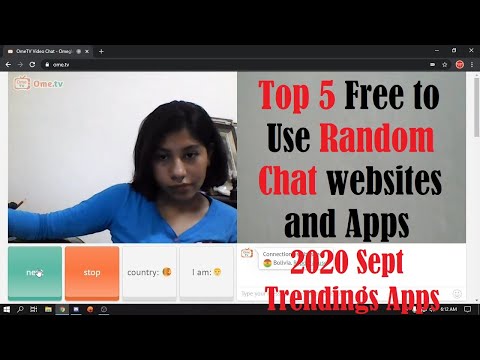
When comparing features of Chatroulette, Tinychat, and newer services, the core distinction lies in moderation and group dynamics. Chatroulette offers instant one-on-one video with random strangers, but its lack of persistent user profiles and minimal filtering often leads to unscreened encounters. Tinychat instead centers on permanent, topic-based chat rooms, allowing multiple video feeds simultaneously and optional text or voice channels, giving users control over their audience. Newer competitors like Ome.tv or Shagle integrate gender filters and location tags, while services such as YouNow blur the line by adding live broadcasting and viewer interaction. Consequently, Chatroulette prioritizes raw randomization, Tinychat emphasizes community via rooms, and newer platforms blend matching filters with broadcast-style engagement.

Chatroulette offers raw, unfiltered one-on-one matching; Tinychat provides organized, multi-user rooms; newer services add gender or location filters and live-stream hybrid features.
Selecting Interest-Based Rooms for Targeted Language Practice
By choosing interest-based language rooms, you skip random small talk and dive directly into conversations tailored to your fluency goals. These focused spaces connect you with partners who share your target language, letting you practice specific vocabulary about cooking, gaming, or travel without the guesswork of an open chat. You can stumble through a recipe discussion or debate a film plot, turning each session into a practical, real-world drill rather than a stilted lesson.
Interest-based rooms transform video chats into targeted language workouts, matching you with partners who help you build vocabulary around shared passions.
Leveraging Mobile Apps for On-the-Go Learning Sessions
Turning commutes into classrooms, users can leverage mobile apps for on-the-go learning sessions by instantly connecting with native speakers or tutors via live video. Instead of passive scrolling, you can practice a new language, debate a historical topic, or get real-time feedback on a presentation while waiting in line. *These impromptu conversations transform dead time into productive, interactive study blocks.* The key lies in using apps that filter partners by learning goals, ensuring every random chat has an educational purpose.
Mobile apps turn idle moments into active, video-based lessons, making any location a potential classroom for spontaneous, skill-building conversations with strangers.
Advanced Strategies for Seasoned Users
Curate your digital environment by using multiple overlays and virtual cameras to dynamically shift your background and lighting mid-call, crafting distinct personas for different conversational vibes. Deploy granular mute filters per app permission to selectively block audio from specific system sources while letting your voice through, giving you seamless control over shared sounds. Master the art of the deliberate pause, using silence not as awkwardness but as a strategic tool to invite the stranger to reveal more of their intent. Combine this with scripted conversation loops you can inject when energy dips, keeping the interaction volatile and unpredictable rather than flat.
Organizing Topic-Focused Calls Like Book Clubs or News Debates
For seasoned video call strangers, orchestrating topic-focused calls transforms random chats into structured intellectual exchanges. Begin by publishing a clear, time-boxed agenda for your book club or news debate, specifying the discussion framework and any prerequisite material. Use a dedicated platform like a shared calendar or a community post to recruit participants who agree to the topic. During the call, assign a moderator to keep dialogue on track, ensuring every voice is heard. This practice elevates shallow small talk into structured intellectual exchange, fostering genuine connection around shared interests.
- Pre-select a specific book chapter or news article and share it 48 hours before the call.
- Appoint a rotating moderator to enforce speaking turns and time limits per point.
- Start with a round-robin opening question to surface each participant’s core takeaway.
- End with a 5-minute debrief to agree on a topic for the next session.
Recording Select Sessions (with Permission) for Self-Review
For seasoned users, recording select sessions with permission transforms random video calls into a personal coaching archive. Before hitting record, always confirm consent verbally and via chat for legal clarity. Focus on isolated clips where you navigated a difficult conversation or tested a specific opening line. Reviewing these recordings allows you to pinpoint vocal hesitations, awkward pauses, or moments your energy dropped. Compare a recorded successful call against a failed one to identify your precise pivot points—like when you shifted from small talk to deeper questions. This targeted self-review sharpens your intuition faster than live practice alone, turning every approved recording into a measurable skill upgrade.
| Recording Focus Area | Self-Review Action |
|---|---|
| Failed connection | Time-stamp the moment interest faded; analyze your tone shift |
| Successful deep talk | Transcribe the question that unlocked the conversation |
| Awkward silence | Count seconds; test a new recovery phrase next session |
Forming Small Study Groups from Random Encounters
When a random video chat reveals a shared academic interest, pivot instantly from casual banter to a focused invitation for a collaborative micro-study group. Propose a specific topic, like “mastering polynomial limits tonight,” and exchange a temporary meeting link. Limit the group to three or four participants to maintain accountability, and assign each person a mini-topic to present within the first five minutes of the session. This transforms a fleeting encounter into a high-yield learning sprint.
Q: What if someone joins the study group but stops contributing mid-session? A: Politely ask if they need a 2-minute break or a topic recap. If they remain silent, thank them for their time and invite them to rejoin a future session. This protects the group’s focus without burning the bridge.