


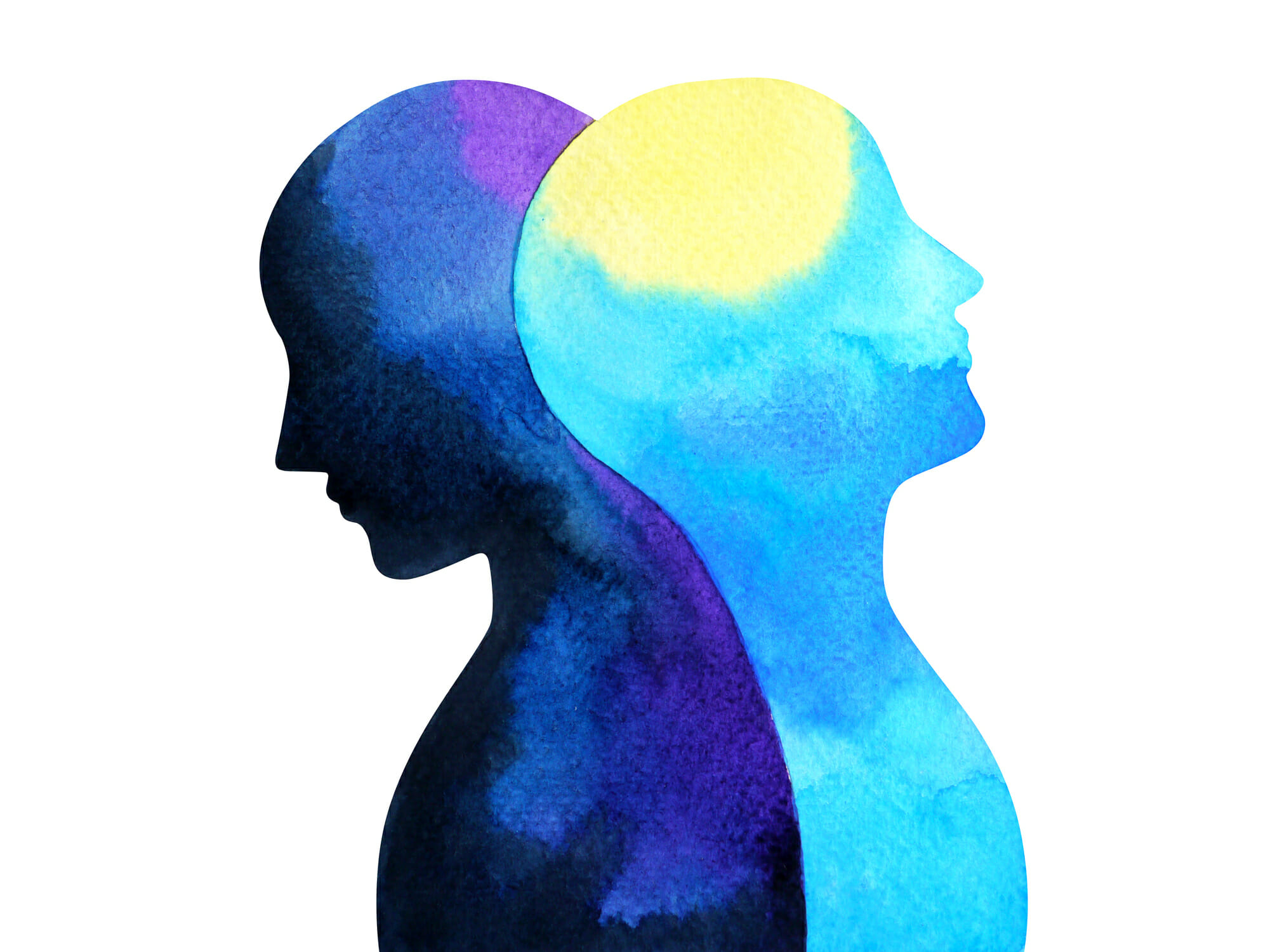
Dealing with Bipolar Disorder
Over the last number of years, I hear more and more people identify themselves as bipolar. Many have been diagnosed with this disorder by psychiatrists and as a result carry the label around their neck as a chain describing their up-and-down emotional condition. Bipolar disorder used to be called manic depressive, but it was relabeled a few years ago. Today, nearly anyone who feels up sometimes and down at other times is labeled as bipolar. In some ways, this is just part of the human condition; there is a natural up and down emotional cycle inherent in the body. In other ways, emotional highs and lows can be exaggerated in some people for various reasons.
It is important to recognize that the majority of medication prescribed today is intended to treat the symptoms and not the problem. If a person goes into a facility because of depression, doctors will medicate them to alleviate the perceived symptoms, but this does not get to the root of the problem of why this person feels down. The idea that we are chemically imbalanced is somewhat misleading. There is no chemical test that can be run to identify depression or anxiety, though we know that there are certain chemicals released during these times that contribute to those feelings; why our bodies release these chemicals is the bigger question. Is it a truly physiological issue such as a damaged organ or gland, or is it more of a reaction to other stimuli?
I am certain that the answer you get will depend on who you are asking and what vested interest they have. A doctor who must answer to a board or hospital must work according to the requirements of their employer and within the confines of health insurance requirements in order to receive payment for their services. Often there is pressure for doctors to come to a quick diagnosis and launch a treatment quickly that will produce observable results. However, is that in the best interest of the individual? Is it possible that the issues we face have a deeper relationship to our spiritual condition than just our chemical balance? I submit that this is exactly the truth. I am not saying that someone cannot have a genuine physiological problem because of an actual physical sickness, or because of the removal of an organ or gland for some legitimate reason, the chemicals must now be replaced in an artificial manner. I am saying that these cases are rare, and the use of chemicals to treat people whose bodies otherwise function properly is not the best way to deal with feelings. It is more akin to manipulation than it is medicine.